Jim Miles

In Which I Explain Myself.

  • A World Without Walls: History Without Patriarchy – By Claude AI

    • Note from blogger Jim: I know, I know, AI is evil. Will likely kill us all one day. I couldn’t agree more. Meantime, I’m fiddling on the deck while we wait for the inevitable.

    • For example, I’m tasking Claude (and other AI chatbots) with interesting assignments. Claude is the best writer of the bunch so far in my opinion. I tested the Claude research feature by giving it this prompt:

    • “Write an expository essay at undergraduate reading level explaining what the history of the world would’ve looked like had the social force called the patriarchy, or gender discrimination and misogyny, never existed. Start your timeline at 10,000 BCE, and take it through to a thousand years from now.”

    • After it finished it added a button labelled Publish, so I did that, and it spit out a link, which I haven’t established that works for all users. When I look at it, it leaves out all the URLs included in the original, but I include it for attribution confirmation. This post includes the URLs at the end. Here’s the link to the published version: https://claude.ai/public/artifacts/3f811beb-f913-467c-969d-c268b9efc4be

    • What follows was authored completely by Claude. I thought that the alternate world it described was one I wished I lived in, and was worth sharing. REPEATING FOR EMPHASIS: I DID NOT WRITE THE FOLLOWING ESSAY!

    For most of human existence—millions of years—our ancestors lived in relatively egalitarian societies where both women and men participated fully in survival, decision-making, and community life. Had this equality persisted through the agricultural revolution and into recorded history, the trajectory of human civilization would have been profoundly different, likely faster, more innovative, and significantly less violent. This alternate history isn’t pure fantasy; it’s grounded in archaeological evidence of egalitarian societies, anthropological studies of gender-balanced cultures, and contemporary research showing that gender equality correlates with economic prosperity, scientific innovation, and peace.

    The world we would have built without patriarchy wouldn’t simply be a “reverse” where women dominated men. Instead, drawing on evidence from societies that maintained gender balance—the Minoan civilization, the Iroquois Confederacy, the Mosuo people—it would be a world where authority replaced domination, where care work held equal value to commodity production, and where humanity benefited from the full intellectual and creative capacity of its entire population rather than just half.

    The agricultural transition: shared labor, shared power (10,000-3000 BCE)

    When humans first transitioned from hunting-gathering to agriculture around 10,000 BCE, this shift didn’t inevitably lead to male dominance. Archaeological evidence shows that in our actual history, the earliest agricultural societies showed varied gender relations, and some—like early Neolithic China and the Indus Valley civilization—maintained relatively egalitarian structures for millennia. In a world without patriarchy, this agricultural transition would have unfolded quite differently.

    The shift to settled agriculture would still have occurred, driven by climate changes and population pressures that made intensive food production necessary. However, without the specific conditions that led to patriarchy—particularly the development of private property passed through male lines, the monopolization of defense roles by men, and the religious justification of male authority—agricultural societies would have organized around different principles. Archaeological evidence from the Yangshao culture in Neolithic China shows richly furnished tombs for young women and collective burials suggesting matrilineal clan culture, demonstrating that agricultural societies could maintain gender balance.

    In this alternate timeline, land and livestock would have been owned communally or passed through both maternal and paternal lines equally. The Minangkabau people of Indonesia, the world’s largest matrilineal society today with four million members, demonstrate how agricultural societies can function with property passing from mothers to daughters. Women control domestic duties and business activities, while men participate fully in community decision-making. This model—applied globally in our alternate history—would have prevented the concentration of wealth and power in male lineages that characterized actual historical development.

    Labor division would have been based on practical considerations and individual capability rather than rigid gender roles. Research by anthropologists Sarah Lacy and Cara Ocobock analyzing Paleolithic societies found little evidence for strict gendered division of labor, with both sexes contributing to subsistence. The famous burial at Wilamaya Patjxa in Peru of a female hunter with a complete hunting toolkit, and analysis showing that 30-50% of big-game hunters in early American societies were women, proves that gendered labor division was socially constructed, not biologically determined. In settlements without patriarchy, agricultural work, animal husbandry, craft production, and trade would have engaged both women and men based on skill and interest rather than sex.

    Early settlements like Çatal Hüyük in Turkey (7100 BCE), which archaeological evidence suggests was relatively egalitarian, would have been the norm rather than the exception. Houses of similar size clustered together without apparent hierarchies, and religious imagery featured both male and female figures prominently. Goddess worship—evident in Venus figurines dating back 25,000 years and in the religious iconography of many early agricultural societies—would have continued alongside reverence for male deities, creating balanced spiritual frameworks.

    The rise of civilization without gender hierarchy (3000 BCE-500 CE)

    When complex civilizations emerged in Mesopotamia, Egypt, the Indus Valley, China, and Mesoamerica, they would have developed fundamentally different political and economic structures without patriarchy. The evidence from societies that maintained greater gender equality—particularly ancient Egypt and the Indus Valley civilization—offers insights into what these alternative structures might have looked like.

    Political systems built on inclusive governance would have characterized all early civilizations. In our actual history, ancient Egypt stood out as relatively egalitarian; women enjoyed the same legal rights as men (contingent on social class), could own and administer property, work outside the home, initiate divorce, and participate in legal proceedings. Hatshepsut ruled as pharaoh from 1479-1458 BCE, and powerful queens like Cleopatra demonstrated that women could effectively govern. In a world without patriarchy, this Egyptian model would have been universal. Political leadership would have been based on capability, with women and men serving as rulers, administrators, and judges.

    The Iroquois Confederacy’s governance system, where Clan Mothers appointed male chiefs and could remove them, demonstrates how balanced political power functions. Women controlled food distribution and agricultural production—the economic foundation of society—giving them substantial political influence. This “balanced male leadership with female accountability” would have been replicated across civilizations, preventing the concentration of unchecked power that led to tyranny in patriarchal systems.

    Economic structures recognizing all labor’s value would have transformed wealth distribution and development patterns. In our history, women’s unpaid domestic labor has always been economically crucial—contemporary estimates show it represents 9-41% of GDP globally—yet this work has been systematically devalued and excluded from economic calculations. Without patriarchy, economic systems would have recognized care work, child-rearing, food preparation, and household management as equally valuable to agriculture, construction, and warfare.

    The coverture laws that in actual history denied married women independent legal existence, property rights, or control of their own earnings would never have existed. Instead, both partners in marriages would have maintained economic autonomy and shared property rights. Evidence from ancient Egypt shows that middle-class women could sit on local tribunals, engage in real estate transactions, inherit and bequeath property, secure loans, and witness legal documents. Applied globally, these rights would have enabled women to accumulate wealth, invest in enterprises, and contribute fully to economic innovation.

    Scientific and technological advancement would have accelerated dramatically with full utilization of human intellectual capacity. In our actual history, women made crucial contributions despite enormous barriers—from Enheduanna, the world’s first documented author in 23rd century BCE Mesopotamia, to Trotula of Salerno’s medical advances in the 12th century. A comprehensive study analyzing 1.2 million PhD recipients found that underrepresented groups, including women, produce more innovative research, connecting scientific concepts in novel ways at higher rates than majority groups. Without patriarchy systematically excluding women from education and knowledge production, scientific discovery would have proceeded at least twice as fast, perhaps faster given that diverse teams consistently outperform homogeneous ones.

    Medicine would have particularly benefited. Women’s traditional knowledge of herbal remedies, midwifery, and healing would have been formalized into medical systems rather than suppressed. The dismissal of midwives as “witches” and the elevation of male physicians who initially had less practical knowledge—a pattern that occurred in medieval and early modern Europe—would never have happened. Maternal and infant mortality rates would have dropped much earlier as women’s experiential knowledge combined with systematic study.

    Religious and philosophical traditions would have maintained the goddess worship evident in prehistoric and early historical periods. Inanna/Ishtar in Mesopotamia, Isis in Egypt, the Mother Goddess of the Indus Valley, and the female deities of Minoan Crete represented divine feminine power that in actual history was gradually suppressed and replaced with male-dominated pantheons. The shift to monotheistic religions with exclusively male gods—what scholar Gerda Lerner called “the symbolic devaluing of women in relation to the divine” that became “one of the founding metaphors of Western civilization”—would not have occurred.

    Instead, religious systems would have maintained balanced pantheons or embraced concepts of divine duality, with feminine and masculine principles seen as complementary and equal. This would have had profound social implications, as religious doctrines in actual history provided the primary justification for women’s subordination. Without religious texts declaring women should submit to male authority, without philosophers like Aristotle describing women as “incomplete and damaged human beings,” the entire ideological foundation for gender hierarchy would have been absent.

    The Minoan civilization (3000-1450 BCE) on Crete offers the clearest historical model. Archaeologist John Younger described it as “the closest candidate for a matriarchy that we have,” though more accurately it was egalitarian with matriarchal tendencies. Minoan art depicted powerful women in elaborate court dress, priestesses held significant religious authority, and both women and men participated in physically demanding activities like bull-vaulting. The civilization showed no evidence of major defensive infrastructure or offensive warfare, suggesting that gender equality correlated with peaceful conflict resolution—a pattern confirmed by modern research.

    Knowledge flourishing without barriers (500-1500 CE)

    In this alternate medieval period, the systematic exclusion of women from formal education and intellectual life that characterized actual history would never have occurred. Universities founding in Bologna, Paris, and Oxford from the 11th century onward would have admitted women from inception. The University of Bologna’s 1377 decree stating that woman was “prime reason of sin, weapon of devil, cause of man’s expulsion from paradise” would have been inconceivable in a non-patriarchal world.

    Women scholars, scientists, and physicians would have populated universities and intellectual circles in equal numbers with men. In our actual history, remarkable women succeeded despite enormous obstacles—Hildegard von Bingen composed 80 musical works and wrote extensively on theology and medicine in the 12th century, Christine de Pizan became Europe’s first professional woman writer in the 14th century. Without barriers, such women would have been thousands-fold more numerous, and their male counterparts would have benefited from engaging with diverse perspectives that research shows improve problem-solving and innovation.

    The scientific method emerging in this period would have incorporated women’s empirical knowledge alongside men’s theoretical frameworks. Historian Margaret Rossiter documented how women’s contributions were systematically erased through what she termed the “Matilda Effect”—the pattern of attributing women’s work to male colleagues. In a non-patriarchal world, collaboration would have been genuinely collaborative, and discoveries would have accumulated faster. Mathematical and astronomical advances, medical knowledge, engineering innovations, and technological developments would have progressed more rapidly with full human participation.

    Religious institutions would have included women as priests, bishops, theologians, and scholars. Monasteries and convents would have been equally prestigious and well-funded, centers of learning open to both sexes. Religious art and music would have reflected women’s creativity as prominently as men’s. The rich tradition of female mystics like Julian of Norwich and Margery Kempe—who in actual history operated on the margins of religious authority—would have been central to theological development.

    Arts and culture would have been transformed by women’s full participation. In our actual history, women faced systematic barriers: exclusion from life drawing classes (considered too scandalous), denial of access to art academies, inability to study human anatomy, and relegation to “lesser” artistic forms like miniatures and decorative arts. Musicologist Marcia Citron identified how women composers were dismissed as producing “salon music” rather than serious compositions, how marriage made musical careers nearly impossible, and how male reviewers systematically devalued women’s work.

    Without these barriers, medieval and Renaissance art would have been shaped by artists like Artemisia Gentileschi—whose powerful Baroque paintings challenged viewers even in a patriarchal context—multiplied by thousands. Musical composition would have benefited from innovators like Barbara Strozzi, who in actual 17th-century Venice published more works than anyone else in her era despite gender discrimination. The entire canon of art, literature, and music would have been richer, more diverse, and more innovative.

    Literature would have particularly flourished. Women’s perspectives, storytelling traditions, and creative visions would have shaped cultural narratives from the beginning. The heroic tales and epic poems that in actual history focused almost exclusively on male protagonists would have been balanced by equally celebrated stories of women’s adventures, intellect, and achievements. Cultural values transmitted through stories would have emphasized cooperation, care, and community alongside individual heroism.

    The scientific revolution democratized (1500-1800)

    The explosion of scientific discovery in early modern Europe would have been dramatically more powerful with women’s full participation. In actual history, this period saw systematic exclusion intensify even as knowledge expanded. Women like Rosalind Franklin, whose X-ray crystallography was crucial to discovering DNA’s structure but who received no credit, represent countless lost contributions. A 2020 study analyzing 1.2 million PhD recipients found that women and racial minorities produce more innovative research but have their novel contributions taken up by other scholars at lower rates and face significantly worse career outcomes.

    Without patriarchy, the Scientific Revolution would have moved faster and in different directions. Women’s questions and perspectives would have shaped research agendas. For instance, in actual history, medical research focused overwhelmingly on male bodies as the “default,” treating women’s physiology as a deviation. Women studying medicine from the beginning would have ensured that research addressed both sexes equally, leading to better health outcomes for everyone.

    The “Matilda Effect” documented by Rossiter—where women’s discoveries were attributed to men—would never have existed. Discoveries we know were made by women despite suppression would have been among thousands of others. Elizabeth Fulhame’s discovery of chemical catalysis in 1794, preceding the credited male discoverer by 40 years; Alice Ball’s leprosy treatment stolen and published by a male colleague; Marthe Gautier’s discovery of Down syndrome’s chromosomal cause, credited to Jérôme Lejeune—all these would have been properly attributed, and countless more discoveries never made in actual history would have occurred.

    Diverse teams produce better science, as contemporary research consistently demonstrates. Teams with equal gender mix perform better in innovation, sales, and profits than male-dominated teams. Mixed-gender research teams produce more novel and higher-impact scientific ideas. Applied to the Scientific Revolution, this means fundamental breakthroughs would have come earlier. The germ theory of disease, understanding of genetics, developments in physics and chemistry, mathematical advances—all would have benefited from insights that come from diverse perspectives approaching problems differently.

    Colonialism and its justifications would have taken different forms, though wouldn’t necessarily have been prevented entirely. However, the specific patriarchal justifications for imperialism—the “civilizing mission” that included imposing European gender norms on colonized peoples—would have been absent. Many indigenous societies, including the Iroquois, Cherokee, and other Native American groups, had more gender-balanced structures than European colonizers. Without patriarchy in Europe, colonialism’s cultural impacts would have been less destructive of indigenous gender egalitarianism.

    Enlightenment philosophy would have been shaped by women thinkers from the start. Mary Wollstonecraft’s “A Vindication of the Rights of Woman” (1792)—revolutionary in actual history—would have been unnecessary because the Enlightenment’s core principles of liberty, equality, and reason would have applied to all humans without question. Political philosophy, social contract theory, and concepts of natural rights would have been developed with women’s full participation, creating more comprehensive and just theoretical frameworks.

    Industrialization with full human capital (1800-1950)

    The Industrial Revolution transformed human society, but in actual history it was built on massive exploitation of women and children. Women workers dominated the textile industry—the core of early industrial capitalism—yet faced brutal conditions, systematic wage discrimination, and exclusion from skilled positions and union leadership. Historian Maxine Berg noted that “when we talk of industry in the eighteenth and early nineteenth centuries, we are talking of a largely female workforce.”

    In a non-patriarchal industrial revolution, women’s labor would have been recognized, properly compensated, and protected from exploitation equally with men’s. The artificial separation of “productive” paid labor from “reproductive” unpaid labor—a separation that masked women’s continuing economic contributions—would never have occurred. Care work, child-rearing, and household labor would have been recognized as economically essential and compensated accordingly, either through wages for care workers or through social systems providing these services publicly.

    This economic recognition would have transformed development patterns. The International Labour Organization estimates that unpaid care work currently represents 9-41% of GDP across different economies—economic value that goes unrecognized in national accounts. Marilyn Waring’s groundbreaking 1988 critique showed how this exclusion distorts economic policy. In our alternate history, GDP and economic planning would have always included all forms of productive labor, leading to more efficient resource allocation and faster overall development.

    Labor movements would have been more powerful and effective from the start. In actual history, male union leaders worked to keep women’s wages low and excluded women from skilled positions. Women like the Lowell Mill Girls had to create separate organizations. Without gender antagonism, workers would have unified more effectively against exploitative owners, winning better conditions, shorter hours, and fair wages earlier. The labor reforms that took decades of struggle in actual history—the eight-hour workday, workplace safety standards, child labor restrictions—would have been achieved faster.

    Education expanded rapidly in this period in actual history, but with systematic discrimination. In the United States, tax-supported schooling for girls began only in 1767, and colleges remained male-only bastions for centuries (Harvard didn’t admit women until 1943, over 250 years after founding). In our alternate timeline, universal education including higher education would have developed for all citizens simultaneously, recognizing that developing full human potential requires educating everyone.

    This educational equality would have accelerated technological and scientific advancement exponentially. By the late 19th century in actual history, women who managed to obtain education made crucial contributions—Marie Curie’s discoveries in radioactivity (she won two Nobel Prizes), Emmy Noether’s revolutionary contributions to mathematics, Rosalind Franklin’s work on DNA structure. With universal education, such women would have been ten thousand-fold more numerous, and their collective contributions would have pushed science and technology decades ahead of actual historical development.

    Political systems transformed in this era as democratic movements challenged monarchies and aristocracies. The women’s suffrage movement—one of the largest political mobilizations in history—wouldn’t have been necessary in a non-patriarchal world. Women would have had full political rights from the start of democratic systems. Research on women’s suffrage effects in actual history is striking: child mortality decreased 8-15% (preventing 20,000 annual child deaths) as American women gained voting rights, public health spending increased dramatically, and legislative priorities shifted toward social welfare, education, and health.

    Applied from democratic movements’ beginnings, this would mean that the 19th and early 20th centuries’ political development would have prioritized human welfare more and military conquest less. Research consistently shows that countries with higher female labor force participation exhibit lower levels of international violence—those with 40% women in labor force are nearly 30 times less likely to experience internal conflict than those with 10%. A non-patriarchal world would likely have seen less frequent and less destructive wars.

    The world wars might have been prevented or at least substantially reduced in scale. While conflict wouldn’t have been eliminated entirely—humans compete for resources regardless of gender systems—the specific nationalism, militarism, and imperial ambitions that drove 20th-century warfare were deeply tied to patriarchal conceptions of masculinity and male honor. Studies show that gender-equal societies are significantly less likely to use military force to resolve disputes. If the major powers in 1914 and 1939 had been gender-equal democracies with women in leadership positions, the diplomatic crises might have been resolved peacefully.

    The Holocaust and other genocides were driven by ideologies viewing certain groups as subhuman—ideologies that shared logical structures with patriarchy’s devaluation of women. Without patriarchy’s conceptual framework for viewing some humans as naturally inferior, genocidal ideologies might have found less fertile ground. This is speculative, but research on authoritarian movements shows they consistently promote traditional patriarchal gender roles alongside ethnic hierarchies, suggesting these systems of domination reinforce each other.

    The contemporary transformation (1950-2025)

    Post-World War II development in actual history saw gradual progress toward gender equality, particularly in developed nations. This provides excellent evidence for what full equality would have produced. The Nordic countries—Iceland, Finland, Norway, Sweden—have come closest to gender parity, closing 87-93% of their gender gaps. These countries consistently rank among the world’s most prosperous, peaceful, healthy, and innovative societies.

    Economic performance improves dramatically with gender equality. The McKinsey Global Institute estimated that $28 trillion (26% of global GDP) could be added by 2025 if women participated in the economy identically to men. Studies show that closing gender gaps could increase GDP by 3-19% across different countries. In our alternate timeline where these gaps never existed, global GDP would be vastly higher—perhaps 50-100% higher than actual history by 2025, representing tens of trillions in additional wealth and dramatically better living standards for everyone.

    This prosperity would come from several sources. First, efficient allocation of human capital: allowing people to work in fields matching their talents rather than their gender produces better outcomes in every sector. Studies show that occupational segregation by gender creates significant economic inefficiency. Second, innovation from diversity: research consistently demonstrates that gender-diverse teams make 25-50% better decisions than homogenous groups, produce more novel scientific ideas, and perform better in business contexts. Third, recognition of care work: properly valuing and supporting care work improves children’s development, elderly care, and overall social functioning, creating positive effects that compound across generations.

    Scientific and technological advancement in our alternate present would be decades ahead. The 2020 study finding that women and minorities produce more innovative research but face career penalties for doing so suggests that without those penalties, the innovation rate would be substantially higher. Computing technology would have advanced faster—the ENIAC programmers, six women who made substantial contributions but were historically ignored, represent the pattern of women’s contributions being erased. With full recognition and support, programming and computer science would have developed more rapidly.

    Medical advances would particularly benefit from diverse researchers asking different questions and studying different problems. In actual history, heart disease in women was understudied because symptoms differ from men’s; pain management often inadequate because research focused on male subjects; autoimmune diseases affecting primarily women received less funding. In our alternate timeline, such biases would never have existed, and medical knowledge would be more comprehensive and effective.

    Political systems in this alternate 2025 would have 50% women in all governing bodies as a natural outcome rather than requiring quotas. Research on women’s political leadership shows that countries with more women in office pass more laws enhancing women’s economic rights, boosting female labor force participation and economic growth. Women in peace processes make agreements 35% more likely to last 15+ years. Applied globally throughout the post-war period, this would mean more stable international relations, fewer armed conflicts, and more effective global cooperation on shared challenges.

    Environmental policy would have been stronger earlier. Research shows that women demonstrate greater awareness of energy conservation and natural resource preservation, are more willing to invest in environmentally friendly options, and that one percentage point increase in female managers correlates with 0.5% reduction in CO2 emissions. Climate change—the defining challenge of our current era—would be less severe in our alternate timeline because environmental policies would have been prioritized more highly throughout the 20th century.

    Cultural production would be immensely richer. The literary, artistic, and musical canons would include women’s voices and perspectives throughout rather than being dominated by men. This diversity would have enriched everyone’s cultural experience. Research on arts and literature shows that different perspectives and experiences produce different kinds of creativity—not better or worse, but different. A canon shaped by full human participation would be more varied, more innovative, and more reflective of the full range of human experience.

    Social structures would have evolved toward models we’re only beginning to develop in actual history. The “caring economy” framework—centering care work as foundational rather than peripheral—would be fully implemented. Workplace organization would accommodate care responsibilities for all workers. The artificial separation between “public” market sphere and “private” domestic sphere would have broken down, with both spheres recognized as economically and socially essential.

    Family structures would show greater diversity and flexibility. The nuclear family model—parents plus children in isolated units—that became normative in mid-20th century patriarchal societies would be one option among many. Multigenerational households, communal child-rearing, flexible relationship structures, and varied living arrangements would all be socially accepted. Research on contemporary matrilineal societies like the Mosuo shows that alternative family structures can produce positive outcomes, including lower stress levels and better cardiovascular health for women.

    Projecting forward: the next millennium (2025-3025)

    Looking ahead requires informed speculation based on current trends and research on gender equality’s effects. The 2025 Global Gender Gap Report estimates 123 years to full parity at current rates of progress—a painfully slow timeline. But in our alternate history where parity was never lost, development would follow dramatically different trajectories.

    By 2100 in our alternate timeline, human civilization would have achieved technological and social advances that might not occur until 2200-2300 in actual history, if ever. The cumulative effects of having access to full human intellectual capital for millennia would compound into dramatic advantages. Some specifics:

    Medical technology would likely have achieved significant life extension and health improvements. In actual history, aging research has been underfunded and progress slow. With twice the research capacity throughout history, fundamental understanding of human biology would be much deeper. Aging might be significantly delayed, infectious diseases largely conquered, genetic therapies routine, and regenerative medicine advanced. Average life expectancy could exceed 120-150 years by this alternate 2100.

    Energy and climate would have been solved through clean technology. In actual history, fossil fuel interests dominated energy policy throughout the industrial era, and climate action came far too late. In a non-patriarchal world with more inclusive decision-making and earlier environmental consciousness, the transition to renewable energy would have begun by mid-20th century. By 2100, fusion power or advanced solar technology would provide abundant clean energy, and climate change would be successfully mitigated.

    Space exploration and settlement would be well-established by 2100. NASA research showed that diverse teams perform better in space missions and isolation scenarios. With full human participation and earlier technological advancement, space programs would have progressed faster. Permanent settlements on Mars and lunar bases for scientific research and resource extraction would be operational. Asteroid mining might provide mineral resources, reducing Earth-based extraction.

    Artificial intelligence and robotics would be more advanced but developed with better ethical frameworks. Research shows that diverse teams developing AI create more comprehensive and less biased systems. The AI alignment problem—ensuring AI systems benefit humanity—would be approached with more perspectives and more careful consideration of diverse human values. By 2100, AI would augment human capabilities extensively while being carefully controlled to prevent harmful outcomes.

    By 2500, assuming continued stable development, humanity would be a spacefaring civilization with settlements throughout the solar system. Earth’s population might be stabilized at sustainable levels (research shows that gender equality correlates with lower fertility rates and demographic transition). Economic systems would be post-scarcity for basic needs, with advanced manufacturing and energy technology providing abundance. Political systems would be highly democratic and participatory, enabled by technology and by social structures emphasizing consensus and inclusion.

    By 3025, a full millennium from our present, the difference between this timeline and actual history would be almost unimaginably vast. Having benefited from efficient use of human capital for 13,000 years instead of 200 years, cumulative technological advancement would likely be at levels difficult to predict. Some possibilities grounded in current understanding:

    Physical human limitations might be largely overcome through biological engineering, cybernetic enhancement, or uploading consciousness to digital substrates. Humanity might have spread beyond the solar system through generation ships or breakthrough propulsion technology. Earth might be entirely restored to ecological health through advanced environmental management. Disease, aging, and material scarcity might be distant memories.

    But more important than specific technologies would be social and psychological development. A civilization built on cooperation, care, and recognition of all people’s worth would have developed very different cultural values than our actual patriarchal history produced. Research psychologist Abraham Maslow’s hierarchy of needs suggests that people whose basic needs are met can focus on self-actualization and transcendence. An entire civilization at that level would focus on creativity, exploration, philosophical and spiritual development, and artistic expression.

    The question of whether violence and conflict would be eliminated is complex. Research shows that gender equality strongly correlates with peaceful conflict resolution and lower violence at all levels from domestic to international. Countries with 40% women in labor force are nearly 30 times less likely to experience internal conflict than those with 10%. Extrapolating this pattern over millennia suggests that violence would decrease dramatically but perhaps not disappear entirely—humans would still have disagreements and compete for status and resources, but would resolve conflicts through negotiation, mediation, and consensus-building rather than through violence.

    The weight of walls never built

    The most profound insight from this alternate history isn’t about technology or politics—it’s about human potential. In actual history, patriarchy has operated like a massive weight on human civilization, requiring enormous energy simply to maintain systems that arbitrarily limited half the population. The restrictions on women’s education, economic participation, political voice, and creative expression represented not just injustice to women, but catastrophic waste of human capability.

    Contemporary research provides striking evidence of this waste. The finding that closing gender gaps could add $28 trillion to global GDP represents lost prosperity from just a few decades of partial exclusion. Compound this across millennia, and the total lost economic value is almost incomprehensible—perhaps ten times current global wealth. The discoveries never made because women scientists were excluded, the books never written because women authors couldn’t publish, the political solutions never implemented because women leaders were denied office—these absences have shaped actual history in ways we can barely recognize because we don’t know what we’ve missed.

    The 2020 study finding that women and minorities produce more innovative research but face career penalties reveals a terrible paradox: the very people most capable of advancing human knowledge are most likely to be pushed out of research careers. Applied across history, this suggests that humanity’s rate of innovation has been far below its potential—perhaps less than half what it could have been. The scientific and technological advances that have occurred despite patriarchy represent a fraction of what diverse, inclusive research communities would have achieved.

    Consider what this means practically. In actual history, it took until the mid-20th century for antibiotics to be discovered, until the 21st century for renewable energy to become cost-competitive, until the present day for artificial intelligence to reach current capabilities. In the alternate timeline with full human participation, these advances might have come a century earlier. Diseases that killed millions in actual history would have been cured sooner. Climate change might have been prevented entirely rather than requiring desperate mitigation. The compounding effects of earlier breakthroughs enabling later ones means the technological gap between timelines would widen over time.

    But beyond material prosperity and technological advancement, the alternate timeline would have produced fundamentally different human consciousness. Growing up in societies that truly valued all people equally, that recognized care work as essential rather than dismissing it, that organized around cooperation rather than domination—this would shape human psychology in profound ways. Research on gender-equal societies shows measurably better outcomes: lower violence, better mental health, higher social trust, greater happiness. Applied across generations, these effects would accumulate into a civilization quite different in character from our actual history.

    The transition we’re currently undergoing in actual history—from patriarchal structures toward greater equality—is revealing what this different civilization might look like. As women have entered workplaces, gained political rights, and achieved greater social equality, societies have measurably improved on numerous metrics. The Nordic countries with highest gender equality are also most prosperous, peaceful, healthy, and satisfied. This provides empirical evidence that the alternate timeline would be better not just for women, but for everyone.

    The implications are both sobering and hopeful. Sobering because they reveal how much human potential has been wasted, how much suffering has been unnecessary, how much farther along we could be if patriarchy had never constrained us. Hopeful because they show that continued progress toward equality will yield substantial benefits—economic, scientific, social, and cultural. We can’t change the past, but we can learn from understanding what was lost and work toward a future that reclaims that potential.

    The evidence is clear: patriarchy has been one of humanity’s most costly mistakes, a system that served the interests of small groups of powerful men while imposing enormous costs on everyone else. A world without those walls would have been richer in every sense—in material wealth, in knowledge, in art and culture, in justice, in peace, and in human flourishing. That world wasn’t built in actual history, but understanding what it could have been illuminates the path toward building something closer to it in the future we can still create.


    Sources and Research Notes

    Patriarchy Origins and Development

    1. UCL. “Analysis: How did the patriarchy start – and will evolution get rid of it?”
      https://www.ucl.ac.uk/news/2022/sep/analysis-how-did-patriarchy-start-and-will-evolution-get-rid-it
      Research on how patriarchy emerged from agricultural transition and intensified with specific conditions including private property, defense roles, and religious justification

    2. EBSCO. “The Creation of Patriarchy by Gerda Lerner”
      https://www.ebsco.com/research-starters/literature-and-writing/creation-patriarchy-gerda-lerner
      Gerda Lerner’s foundational work on how patriarchy was created rather than natural, including the role of symbolic devaluing of women in relation to the divine

    3. Wikipedia. “Patriarchy”
      https://en.wikipedia.org/wiki/Patriarchy
      Overview of patriarchal systems and their historical development

    Matrilineal and Egalitarian Societies

    1. NomadIT. “Nicole Mathieu’s legacy for the theory of matrilineal societies”
      https://nomadit.co.uk/conference/cascaiuaes2017/p/5283
      Theory and evidence of matrilineal social organization

    2. AKJournals. “Elucidating evolutionary principles with the traditional Mosuo: Adaptive benefits and origins of matriliny and ‘walking marriages’”
      https://akjournals.com/view/journals/2055/19/1/article-p22.xml
      Study of the Mosuo people, one of the world’s few remaining matrilineal societies

    3. EBSCO. “Matriarchy”
      https://www.ebsco.com/research-starters/political-science/matriarchy
      Research on matriarchal and egalitarian social structures

    4. Feminism and Religion. “What Is ‘Egalitarian Matriarchy’ and Why Is It So Often Misunderstood?”
      https://feminismandreligion.com/2018/04/16/what-is-egalitarian-matriarchy-and-why-is-it-so-often-misunderstood-by-carol-p-christ/
      Explanation of egalitarian matriarchal societies and how they differ from patriarchy

    Gender in Early Societies and Hunter-Gatherers

    1. NIH/PMC. “The Myth of Man the Hunter: Women’s contribution to the hunt across ethnographic contexts”
      https://pmc.ncbi.nlm.nih.gov/articles/PMC10306201/
      Archaeological evidence showing 30-50% of big-game hunters in early American societies were women, challenging the “man the hunter” narrative

    2. Medium. “The Role of Women in Ancient Civilizations”
      https://scanderbegal.medium.com/the-role-of-women-in-ancient-civilizations-unveiling-the-tapestry-of-societal-roles-rights-and-32b7ffa0a6c7
      Analysis of women’s roles in ancient Egypt, Mesopotamia, and other early civilizations

    Religious and Cultural History

    1. Medium. “Ressurecting the Goddess Story”
      https://medium.com/@radhaanilia/ressurecting-the-goddess-story-6711f8baf378
      History of goddess worship and its suppression

    2. Tales of Times Forgotten. “Why Did the Patriarchal Greeks and Romans Worship Such Powerful Goddesses?”
      https://talesoftimesforgotten.com/2021/07/06/why-did-the-patriarchal-greeks-and-romans-worship-such-powerful-goddesses/
      Analysis of powerful female deities in patriarchal ancient societies

    Women in Arts and Culture

    1. THE GANNON KNIGHT. “The suppressed history of women writers”
      https://gannonknight.com/24056/features/the-suppressed-history-of-women-writers/
      Documentation of how women writers were systematically excluded and suppressed

    2. The Art Newspaper. “No great women artists? How Linda Nochlin tore apart the art historical narrative 50 years ago”
      https://www.theartnewspaper.com/2021/02/11/no-great-women-artists-how-linda-nochlin-tore-apart-the-art-historical-narrative-50-years-ago
      Linda Nochlin’s groundbreaking feminist art history scholarship

    3. Wikipedia. “List of women composers by birth date”
      https://en.wikipedia.org/wiki/List_of_women_composers_by_birth_date
      Documentation of women composers throughout history

    4. Activeminds. “Women Classical Composers”
      https://activeminds.com/topics/Women_Composers_Classical.html
      History of women in classical music composition

    5. Epica. “The Influence of Women Writers”
      https://epica.com/blogs/articles-by-epica/the-influence-of-women-writers
      Analysis of women writers’ contributions to literature

    Women in Science and Innovation

    1. Smithsonian Magazine. “Women Scientists Were Written Out of History”
      https://www.smithsonianmag.com/science-nature/unheralded-women-scientists-finally-getting-their-due-180973082/
      Margaret Rossiter’s work on the “Matilda Effect” and systematic erasure of women scientists

    2. Phys.org. “The women scientists forgotten by history”
      https://phys.org/news/2022-05-women-scientists-forgotten-history.html
      Additional coverage of women’s contributions to science that were erased or misattributed

    3. Discover Magazine. “Meet 10 Women in Science Who Changed the World”
      https://www.discovermagazine.com/the-sciences/meet-10-women-in-science-who-changed-the-world
      Profiles of women scientists despite barriers

    4. Literary Hub. “The Long Silencing of Women in Science Continues Today”
      https://lithub.com/the-long-silencing-of-women-in-science-continues-today/
      Contemporary analysis of continued barriers facing women in science

    5. Lostwomenofscience. “The Matilda Effect: How Women Are Becoming Invisible in Science”
      https://www.lostwomenofscience.org/news-events/the-matilda-effect-how-women-are-becoming-invisible-in-science
      Documentation of the Matilda Effect phenomenon

    6. Wikipedia. “Matilda effect”
      https://en.wikipedia.org/wiki/Matilda_effect
      Overview of systematic denial of credit to women scientists

    Diversity and Innovation in Research

    1. PNAS. “The Diversity–Innovation Paradox in Science”
      https://www.pnas.org/doi/10.1073/pnas.1915378117
      Major study of 1.2 million PhD recipients showing underrepresented groups produce more innovative research but face worse career outcomes

    2. NCBI/PMC. “The Diversity–Innovation Paradox in Science”
      https://www.ncbi.nlm.nih.gov/pmc/articles/PMC7196824/
      Same study, alternative access

    3. PNAS. “Gender-diverse teams produce more novel and higher-impact scientific ideas”
      https://www.pnas.org/doi/10.1073/pnas.2200841119
      Research showing gender-diverse research teams outperform homogeneous teams

    4. Scientific American. “Diversity in STEM: What It Is and Why It Matters”
      https://blogs.scientificamerican.com/voices/diversity-in-stem-what-it-is-and-why-it-matters/
      Overview of research on benefits of diversity in science

    5. PubMed Central. “The Science and Value of Diversity”
      https://pmc.ncbi.nlm.nih.gov/articles/PMC6701939/
      Research synthesis on diversity benefits in science

    Economic Impact of Gender Equality

    1. McKinsey. “The economic benefits of gender parity”
      https://www.mckinsey.com/mgi/overview/in-the-news/the-economic-benefits-of-gender-parity
      Analysis showing $28 trillion could be added to global GDP by 2025 with full gender equality

    2. Intereconomics. “Economic Benefits of Gender Equality in the EU”
      https://www.intereconomics.eu/contents/year/2017/number/3/article/economic-benefits-of-gender-equality-in-the-eu.html
      Study showing 3-19% GDP increases from closing gender gaps

    3. APEC. “Unpaid Care and Domestic Work: Counting the Costs”
      https://www.apec.org/publications/2022/03/unpaid-care-and-domestic-work-counting-the-costs
      Analysis showing unpaid care work represents 9-41% of GDP globally

    4. Wikipedia. “Feminist economics”
      https://en.wikipedia.org/wiki/Feminist_economics
      Overview of feminist economic analysis and critiques of mainstream economics

    5. European Investment Bank. “The Economic Power of Gender Equality”
      https://www.eib.org/en/stories/gender-equality-power
      Analysis of economic benefits of gender equality

    Women’s Education History

    1. Guni Network. “Women’s access to Higher Education”
      https://www.guninetwork.org/articles/womens-access-higher-education
      Historical barriers to women’s higher education

    2. BestColleges. “A History of Women in Higher Education”
      https://www.bestcolleges.com/news/analysis/2021/03/21/history-women-higher-education/
      Timeline of women’s access to colleges and universities

    3. Wikipedia. “Women’s education in the United States”
      https://en.wikipedia.org/wiki/Women’s_education_in_the_United_States
      Overview of educational discrimination and progress

    Women’s Suffrage and Political Participation

    1. PubMed Central. “Women’s Suffrage, Political Responsiveness, and Child Survival in American History”
      https://pmc.ncbi.nlm.nih.gov/articles/PMC3046394/
      Study showing child mortality decreased 8-15% after women gained voting rights

    2. Brookings. “Black Women’s Activism: Historical Insights for Today”
      https://www.brookings.edu/articles/leaving-all-to-younger-hands-why-the-history-of-the-womens-suffrage-movement-matters/
      Historical analysis of women’s suffrage movement

    Gender Equality and Peace/Conflict

    1. World Bank Blogs. “Can gender equality prevent violent conflict?”
      https://blogs.worldbank.org/en/dev4peace/can-gender-equality-prevent-violent-conflict
      Research showing gender equality correlates with reduced violence and conflict

    2. Oxford Academic. “Examining Gender Inequality and Armed Conflict at the Subnational Level”
      https://academic.oup.com/jogss/article/6/2/ogaa023/5858328
      Study of relationship between gender inequality and armed conflict

    3. Taylor & Francis. “Gender and the micro-dynamics of violent conflicts”
      https://www.tandfonline.com/doi/full/10.1080/14616742.2022.2083652
      Analysis of gender’s role in conflict dynamics

    Contemporary Gender Equality Measures

    1. Statista. “Gender gap index 2024”
      https://www.statista.com/statistics/244387/the-global-gender-gap-index/
      Current global gender gap statistics

    2. BusinessBecause. “These Are The Top 10 Most Gender-Equal Countries”
      https://www.businessbecause.com/news/in-the-news/9396/top-ten-gender-equal-countries
      Rankings of most gender-equal countries

    3. World Economic Forum. “Global Gender Gap Report 2025: Progress despite uncertainty”
      https://www.weforum.org/stories/2025/06/global-gender-gap-report-2025-key-findings/
      Latest report showing 123 years to full parity at current rates, Nordic countries closing 87-93% of gaps

    4. World Bank. “Women, Business and the Law”
      https://wbl.worldbank.org/en/wbl
      Analysis of legal barriers to women’s economic participation

    Historical Women’s Labor and Industrial Revolution

    1. Monthly Review. “Women, Nature, and Capital in the Industrial Revolution”
      https://monthlyreview.org/2018/01/01/women-nature-and-capital-in-the-industrial-revolution/
      Analysis of women’s labor in early industrialization

    Legal History

    1. America’s Future. “How Government Codified Patriarchy”
      https://americasfuture.org/how-government-codified-patriarchy/
      Analysis of how legal systems institutionalized gender discrimination

    Research Methodology Note: This comprehensive essay draws on academic studies from peer-reviewed journals, historical analysis from established institutions, economic research from international organizations, and contemporary data from global indices. The alternate history presented is grounded in evidence from archaeological findings of egalitarian societies, anthropological studies of matrilineal cultures, and modern research demonstrating the measurable benefits of gender equality across economic, scientific, political, and social dimensions. Where speculation about future developments was necessary, it was based on extrapolation from current trends and established research correlations.

  • I feel sorry for Palestinians languishing under the boot of Israel who cry out for sympathy from Americans, because I know they won’t get it. We have been trained to ignore such cries.

    I’m not talking about the modern infotainment news industry that slants every story on Israel vs Palestine into pro-Israel propaganda. It’s a factor, especially because it prevents many from questioning “the way things are.” But the media didn’t train us to ignore our sympathetic impulses.

    I’m not talking about our terrible Civil Rights history, which a new crop of fascist governors and State legislatures are busy whitewashing. While you still can, educate yourself about the 1921 Tulsa race massacre, for example, in which White Americans got fed up with Black Americans enjoying prosperity. And because Whites were stronger, they destroyed Black Wall Street. Racism is good at destroying sympathetic feelings, but it didn’t train us to ignore them.

    I’m not even talking about Bible-thumping idiot America putting conspiracy theories (known to the believers as “Bible Prophecies”) above people.

    I’m talking about a training that goes back to the very beginning, and may be in our DNA. By that I do not mean this defect is destiny, but only wish to point out that we who yearn for a more perfect union and who want to make this nation an enlightened member of the geopolitical world need to remember what we’re up against: our own genetic heritage. We must evolve our minds.

    We have always subscribed to the philosophy that If you are strong enough to keep it, You should grab more land. It goes back so much further than the indigenous in the Americas finding themselves on reservations or worse. The strongest of every continent have always stolen land for the entire history of our evolution as a species. The old euphemism is “War;” the new one is “national security.” The fact that this planet has plenty of territory for everyone to enjoy a generous piece of it never occurs to us.

    It’s been US versus THEM since we were apes. Do apes go to war over territory? Do white supremacist Christians want to Make America Great Again?

    Make Apes Greedy Again.

    It’s the racism, stupid! It’s the ape’s instinctual adaptive greed for territory translated into the maladaptive human obsession with race.

    We are Frank Herbert’s Harkonnens, George Lucas’s Empire, Gene Roddenberry’s Klingons (or perhaps the Borg). We got ours, fuck everybody else; unless they have something we want, then take it from them, and after that, fuck everyone else. We are brutal, and I’m afraid that’s built-in. To deny that is to fail at a worthy goal before we’ve started: becoming better human beings. If you want to win at war you must know your enemy. We have found the enemy, and he is us!

  • The United Kingdom treats its kings and queens in an interesting way: the royals are never allowed to control the levers of power. Parliament (their equivalent to our Congress) holds all the power, including selection of Prime Minister (their POTUS). Their monarchy serves as a focal point of their patriotic fervor, similar to the feelings we encourage toward our flag or our national anthem, a song about the flag. The king of Britain is like a human flag, or a holiday incarnate; no power, only a figurehead.

    Their ancestors, colonists of our eastern seaboard, created the United States government with some significant differences from the system they were throwing off. They had a well-informed distaste for royal rulers. And the constitution they gave us created a chief executive which reflected that hatred for autocratic rulers and their destructive ‘divinely ordained’ whims.

    The Constitution protects us from kingly abuses of power. The office of the President is limited in several big ways. States grant some powers to the national government, but their local legislatures and governors retain plenty of power to themselves. States cannot easily be manipulated by the President. The national Congress reserves the powers to make war, tax citizens, regulate commerce, etc. which historically had been wielded by kings, often abusively. Our high court is the last word on how federal powers shall be exercised, including the extent to which the President is allowed to make the office more powerful. Citizens are given the last word, ultimately, in that they have the power to make amendments to the text of the constitution, which is itself the final word on the job description of the presidency.

    Those who held the office during our 250 year history shaped the presidency according to how they wielded the powers given to them. They also expended the powers of the office well beyond anything the Framers of the Constitution ever intended. When that document and the writings of its creators are compared with today’s POTUS, it’s obvious that corrective measures must be enacted or else our system of government will become what our Founders feared most: An absolute monarchy wielding power arbitrarily.

    In our constitution, we were given the great gift of the Rule of Law. That great idea protects us from abuse by the authorities we allow to govern us. It means that our chosen rulers cannot do anything to limit our liberty unless they do it through laws. Laws which must harmonize with our constitution and which are never permanent or unchanging.

    Unfortunately, Congress has abdicated much of its power over to the POTUS. This dangerous trend has resulted in levels of power accumulation in the POTUS great enough that Trump has taken over the GOP, corrupted the judicial branch through the appointment of partisan loyalists, and assumed control of Congress by having an iron grip on the majority Republican House and Senate. Many State governors and legislatures bend the knee to him as his GOP allows no independence from his control.

    The Rule of Law might not survive Trump’s campaign to destroy it. Even though we technically remain in a constitutional system with checks and balances limiting POTUS power, 2025 is a different world from colonial America. Trump voters who defend their loyalty to him often describe how the government has failed them. They are duped by him and a cowed GOP into believing lies and conspiracy theories about the waste, abuse, and fraud of a fictional “Deep State.” If only they could see that the biggest threat to our country is the swollen power of the presidency. Their pain is being caused by an inflamed POTUS.

  • SoL Band

    SoL was a band I was in during the years 2002-2003. I dug up old recordings recently, and attempted a remaster and release of the best of them. You will be the judge of how well that project went.

    I used Distrokid to publish them. However, the band name ‘SoL’ is so common, it’s tough to find us. One of the releases is called Mall Gig, so I’ve found that if you use the search term “SoL Mall Gig” you’ll find us, on every streaming platform (Spotify, Apple, Youtube, and many others).

    Soundcloud has the best band info: https://soundcloud.com/jimmilesalt/sets/allsols

    I’ve also embedded them here: https://jimmiles.org/sol-remasters/

  • DEI

    DEI is one of the better ideas Americans ever had. White-only policies were hard wired into the culture for most of our history. Which meant that the talent pool for all public and private jobs was tiny: white men only. Even after civil rights laws finally seeped into the bones of society, white men dominated virtually all industries and sectors.

    DEI is a political crowbar needed to change an apartheid culture into an integrated one. It had barely begun to work in a relatively small percentage of the workplace when it became a target of that very old disease which we’ve never cured, white supremacy. MAGA is merely the most recent incarnation of that enemy of a merit-based, competitive economy, white Christian nationalism.

    DEI is the best way to get the best people for the job, whatever the job is. Merit-based competition is expanded beyond the white male population. The lies told about DEI are projection. By returning to the racial dark ages we limit the talent pool to those whose white privilege blinds them to the fact that they got the job because of their skin color.

  • A page from an ancient Greek New Testament manuscript sits next to a page from a modern New Testament, with a question comparing them: "How did we get from this, to this?"
    How’s your oral history hygiene?


    Those who believe that their New Testament is an accurate translation are fooling themselves, even if they are able to read it in the “original” Greek. Every gospel is paraphrased. Neither Jesus nor any eyewitness to his life sat down in his generation and put pen to paper. Believers are trusting the memories of illiterate fishermen (they would never tell tall tales, eh?). Jesus died around 30 AD; between 70 and 90 AD the gospels were written as compilations of oral histories. Christian doctrine is based on the illusion that believers have an accurate version of an anciently written document. But that is only an illusion.

    Traditions about Jesus, who died circa 33 AD, spread by word of mouth (i.e. as oral history) in Aramaic for four decades until Greek scribes began writing it in 70 AD. Literacy in the ancient world was a vastly different situation than today. Most people of that time had no need for the literacy skills we take for granted, such as the ability to read and write and the possession of tools for doing so. Even when writing was mastered, it took a very different form than our modern written languages.

    Narratives have always been with us, but there was no precision possible in recording them. Important events remained in cultural memory over generations but without the kind of modern accuracy claimed by Christians for their bible doctrines. Until the printing press and mass distribution of literature those narratives were molded by the bias and faulty memories of oral historians. Even after printed pages captured narratives, the accuracy of history always suffers from the creative imaginations of history writers.
    (more…)

  • Image of author standing next to FDR's Washington DC memorial wall which reads I Hate War

    War, it turns out, is much, much worse than we civilian history students thought. Worse than the victims knew, those poor young boys and girls killing and being killed.

    The new insight into the old plague War comes from those young victims themselves. From those young people wounding, and their wounded.

    Cameras built in to the now ubiquitous mobile phones are providing the new evidence. The very few platforms brave enough to share the horrible video evidence give the few willing to see it an unwanted glimpse into just how evil war has always been.

    Always, I insist, because I cannot pretend that this generation invented the horrors of War. They are merely the current players in a very old narrative. The propaganda and motives for it vacillate between hatred and greed, but the story plays out the same every time. It’s just that historical memory serves war as obediently as the young soldiers drafted to experience it.  
    (more…)

  • Mind Poison

    The bad news: brainwashing, gaslighting, and the technological terror of the modern PR machine has been serving evil human projects. 

    The good news: The young of every caste, color, and creed hold the cure. 

    I am still recovering from my poisoned mind after 25 years of SDA/Christian brainwashing. It’s especially difficult since I was employed by them as a brainwasher. But a decade into recovering from the crippled mindset, I am starting to compare the old poison with others I find around me. Religious cult-related mental poisons are surprisingly similar to other kinds I find in the wider world. 

    An obvious one in my country is the cult of Trump. Perhaps less obvious is what I find in the geopolitical world. Propaganda from Russia (pre- and post-USSR) and the Zionist Israel project have relied heavily on such a similar kind of poisoned thinking. When an institution or global ideology can successfully recruit millions of minds into this cult-like culture of gaslighting, then apply that poison to dehumanizing and “othering” vulnerable victims, branding them as less than human, ‘dirty,’ or ‘enemies of humanity,’ they have gone to the next level. A frightening, Orwellian level.  

    SDAs also create a mental barrier between their in-group (a.k.a., The Remnant) and everyone else, but the worst fruits of this are projected into an apocalyptic future, and they make themselves the prophesized victims in this future scenario, martyrs for their cause. Putin’s cult and Netanyahu’s cult do this uncloaked, brazenly, in a full-throated justification for genocidal intentions. Truly horrific.  
    (more…)

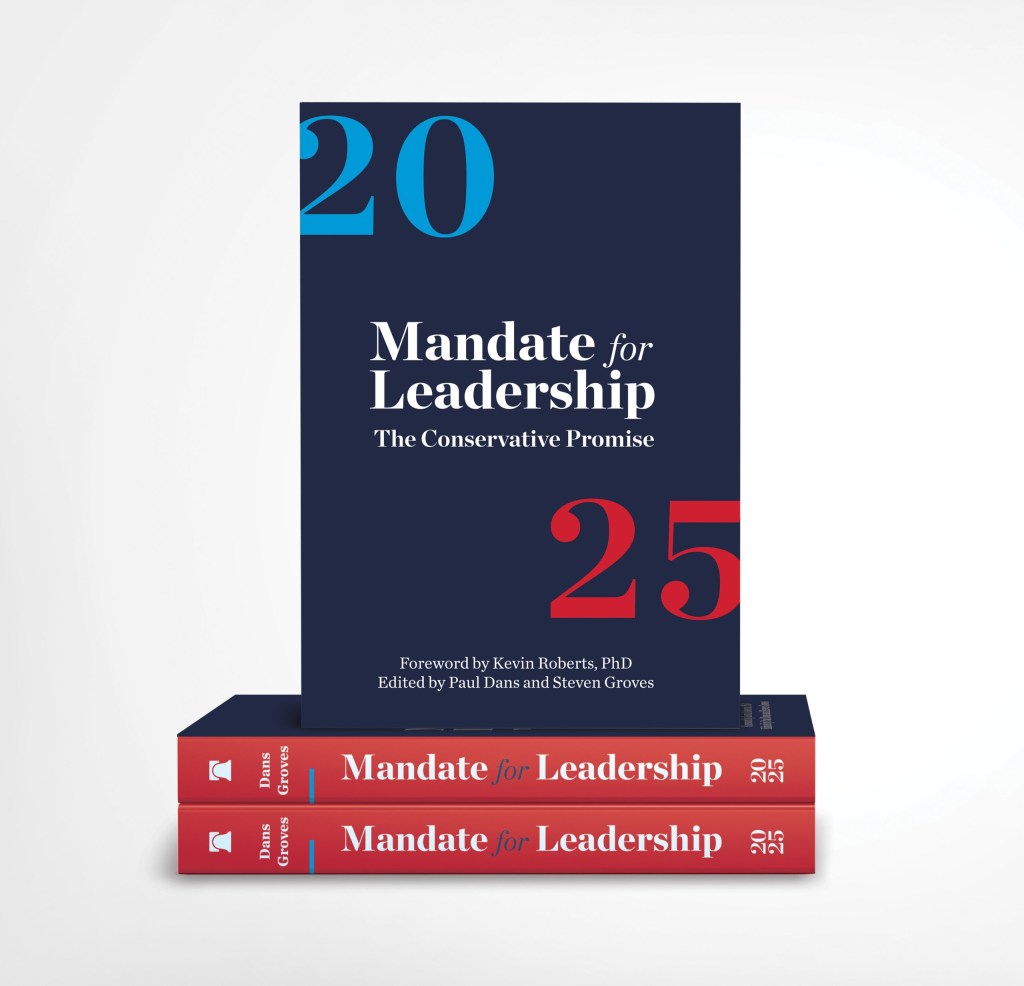
  • Project 2025

    the 2035 Mandate for Leadership, The Conservative Promise, Forward by Kevin Roberts, edited by Paaul Dans and Steven Groves
    From https://www.project2025.org/policy/

    The majority of political conservatives in high office in the USA are Christians, as are the conservative voters who keep them in office. These faux Christians cloak their political agendas in euphemisms in order to hide theocratic fascism behind patriotic-sounding titles. This is dishonest and gaslighting. Don’t believe it? Just look at the evidence they provide against themselves! 

    Here are some excerpts from their 2025 Mandate For Leadership.

    “The Heritage Foundation is proud to have played a small but pivotal role in that story. It was in early 1979—amid stagflation, gas lines, and the Red Army’s invasion of Afghanistan, the nadir of Jimmy Carter’s days of malaise—that Heritage launched the Mandate for Leadership project. We brought together hundreds of conservative scholars and academics across the conservative movement. Together, this team created a 20-volume, 3,000-page governing handbook containing more than 2,000 conservative policies to reform the federal government and rescue the American people from Washington dysfunction. It was a promise from the conservative movement to the country—confident, specific, and clear. Mandate for Leadership was published in January 1981—the same month Ronald Reagan was sworn into his presidency. By the end of that year, more than 60 percent of its recommendations had become policy…”

    (p.2; emphasis mine)

    Clearly, Reagan was a tool of right-wing Christian conservatives. They are not hiding that fact.


    “After that first edition, a new Mandate was produced every four years. But the 2016 edition was one of particular note. It earned significant attention from the Trump Administration, as Heritage had accumulated a backlog of conservative ideas that had been blocked by President Barack Obama and his team. Soon after President Donald Trump was sworn in, his Administration began to implement major parts of the 2016 Mandate. After his first year in office, the Administration had implemented 64 percent of its policy recommendations.”

    (p.885; emphasis mine)

    Obviously, Trump was a tool.


    “The next conservative President must make the institutions of American civil society hard targets for woke culture warriors. This starts with deleting the terms sexual orientation and gender identity (“SOGI”), diversity, equity, and inclusion (“DEI”), gender, gender equality, gender equity, gender awareness, gender-sensitive, abortion, reproductive health, reproductive rights, and any other term used to deprive Americans of their First Amendment rights out of every federal rule, agency regulation, contract, grant, regulation, and piece of legislation that exists.”

    (pp.4-5; emphasis mine)

    Deleting the terms diversity, equity, inclusion, gender, AND ANY OTHER TERM… censorship and mental policing are straight out of the playbook of the Abrahamic religions.


    “America’s vast reserves of oil and natural gas are not an environmental problem; they are the lifeblood of economic growth.”

    (p.13)

    To promote such anti-scientific claims amid ongoing climate change disasters is the hallmark of an ideology based on the book of Genesis i.e., dominion theology.

    “It’s this radical equality—liberty for all—not just of rights but of authority—that the rich and powerful have hated about democracy in America since 1776. They resent Americans’ audacity in insisting that we don’t need them to tell us how to live.”

    (p.14)

    Huh? WTF kind of revisionism is this? The rich GOT rich precisely through exploiting the liberty they enjoy within our peculiarly institutionalized colonial capitalism.

    “Ultimately, the Left does not believe that all men are created equal—they think they are special. They certainly don’t think all people have an unalienable right to pursue the good life. They think only they themselves have such a right along with a moral responsibility to make decisions for everyone else. They don’t think any citizen, state, business, church, or charity should be allowed any freedom until they first bend the knee.”

    (p.16)

    The gaslighting is REAL! First, a bold, evidence-free claim about how the “Left” define equality. Then the claim that the Left demands obeisance! Who advocates that “bend the knee” thing more than conservatives with their fake flag patriotism, and their Christian dominionist ideology?

    “HHS is also home to the Centers for Disease Control and Prevention (CDC) and the National Institutes of Health (NIH), the duo most responsible—along with President Joe Biden—for the irrational, destructive, un-American mask and vaccine mandates that were imposed upon an ostensibly free people during the COVID-19 pandemic. All along, it was clear from randomized controlled trials— the gold standard of medical research—that masks provide little to no benefit in preventing the spread of viruses and might even be counterproductive.

    (p.283; emphasis mine)

    OMG! The disdain for medical science, (well, all science), is clear in this document; again, this flows directly from the anti-science roots within Christianity.

    “Safeguarding civil rights. Enforcement of civil rights should be based on a proper understanding of those laws, rejecting gender ideology and critical race theory.”

    (p.322)

    This statement wins the award for most Orwellian Doublespeak: Advocating a Civil Rights policy that ignores its roots in women’s rights and minority rights. What’s left after you take away those concerns? Straight white Christian men, I guess. Pretty obvious here the influence of misogynism and White Supremacy on the document, and in the ideology guiding the above listed institutions which created it.

    “The next Administration should also rescind Dear Colleague Letter (DCL) GEN 22-11 and DCL GEN 22-10 and its letters to accreditation agencies dated July 19, 2022, which are attempts to undercut Florida’s SB 7044, providing universities more flexibility on accreditation.”

    (p.332; emphasis mine)

    This support for Ron DeSantis’ educational policies in Florida should alarm anyone who cares about teaching and learning.

    By its very design, critical race theory has an “applied” dimension, as its founders state in their essays that define the theory. Those who subscribe to the theory believe that racism (in this case, treating individuals differently based on race) is appropriate—necessary, even—making the theory more than merely an analytical tool to describe race in public and private life. The theory disrupts America’s Founding ideals of freedom and opportunity. So, when critical race theory is used as part of school activities such as mandatory affinity groups, teacher training programs in which educators are required to confess their privilege, or school assignments in which students must defend the false idea that America is systemically racist, the theory is actively disrupting the values that hold communities together such as equality under the law and colorblindness.

    (p.343-344; emphasis mine)


    More next-level gaslighting: CRT founders (who were seeking additional weapons in the ongoing war on racism in this society) “believe that racism … is appropriate–necessary, even…” Such bullshit. More evidence of the White Supremacists who have infected the ideology of the document and its writers and supporters.

    (Conservative Health & Human Services Dep’t) Goal #1: Protecting Life, Conscience, and Bodily Integrity.
    (Conservative HHS) Goal #2: Empowering Patient Choices and Provider Autonomy.

    (p.450; emphasis mine)

    Your second goal would like to talk to your first goal.

    “Protect faith-based grant recipients from religious liberty violations and maintain a biblically based, social science–reinforced definition of marriage and family. Social science reports that assess the objective outcomes for children raised in homes aside from a heterosexual, intact marriage are clear: All other family forms involve higher levels of instability (the average length of same-sex marriages is half that of heterosexual marriages); financial stress or poverty; and poor behavioral, psychological, or educational outcomes.”

    (p.481; emphasis mine)

    Here’s some classic Christian Doublespeak: “a biblically based, social science–reinforced definition of marriage and family.” Just let that sink in. Remind yourself that Christians run universities and fund faith-biased studies run by their own in-house “scientists”. Again, “biblically based”; notice how this gives the lie to their idea of Religious Freedom, defining it strictly within the bounds of the Christian Bible (or, a bit more broadly, the Abrahamic religions). They think all those other religions and atheists like me will just go away if they ignore us.

    The chapter (#15) promoting their ideas about the DEPARTMENT OF HOUSING AND URBAN DEVELOPMENT was written by Benjamin S. Carson, Sr., MD. When I was a Seventh-day Adventist, this guy was a famous SDA surgeon who promoted reading, and nothing more. His work in the Trump administration showed that he should have stayed in his lane.

    “End the war on fossil fuels and domestically available minerals and facilitate their development on lands owned by Indians and Indian nations.”

    (p.537)

    Does anyone think that fossil fuels are a victim, instead of a threat? Yes. Yes they do. Take that up with the authors and support of the document. Does anyone believe these guys are looking out for the best interests of the indigenous people of this land? I really doubt they even believe it themselves.

    From the chapter on the Labor Department:
    Sabbath Rest. God ordained the Sabbath as a day of rest, and until very recently the Judeo-Christian tradition sought to honor that mandate by moral and legal regulation of work on that day. Moreover, a shared day off makes it possible for families and communities to enjoy time off together, rather than as atomized individuals, and provides a healthier cadence of life for everyone. Unfortunately, that communal day of rest has eroded under the pressures of consumerism and secularism, especially for low-income workers. Congress should encourage communal rest by amending the Fair Labor Standards Act (FLSA) to require that workers be paid time and a half for hours worked on the Sabbath. That day would default to Sunday, except for employers with a sincere religious observance of a Sabbath at a different time (e.g., Friday sundown to Saturday sundown); the obligation would transfer to that period instead. Houses of worship (to the limited extent they may have FLSA-covered employees) and employers legally required to operate around the clock (such as hospitals and first responders) would be exempt, as would workers otherwise exempt from overtime.”

    (p.589; emphasis mine)

    Excruciatingly glaring evidence of bias toward a few religions, especially those Judeo-Christian ones. If you want an interesting perspective on where ideas like the above may lead, talk to your local Seventh-day Adventist!

    Major recommendation in Labor Department chapter: “Eliminate Racial Classifications and Critical Race Theory Trainings.”
    (p.582)
    What reasoning do they offer for doing this?
    “With interracial marriages in America increasing, many Americans do not fit neatly into crude racial categories. Under disparate impact theory, moreover, discriminatory motive or intent is irrelevant; the outcome is what matters. But all workplaces have disparities. Congress should: Eliminate disparate impact as a valid theory of discrimination for race and other bases under Title VII and other laws. Disparities do not (and should not legally) imply discrimination per se.

    (p.583; emphasis mine)

    If you want an interesting perspective on where ideas like the above may lead, talk to your local Black person!

    These are the collaborating institutions which created the 2025 Mandate For Leadership document; note how none of their patriotic-Pavlovian titles reveal any hint of the radical Christian dominion theology driving these front organizations (from pp.xi-xii):

    Alabama Policy Institute
    Alliance Defending Freedom
    American Compass
    The American Conservative
    America First Legal Foundation
    American Accountability Foundation
    American Center for Law and Justice
    American Cornerstone Institute
    American Council of Trustees and Alumni
    American Legislative Exchange Council
    The American Main Street Initiative
    American Moment
    American Principles Project
    Center for Equal Opportunity
    Center for Family and Human Rights
    Center for Immigration Studies
    Center for Renewing America
    Claremont Institute
    Coalition for a Prosperous America
    Competitive Enterprise Institute
    Conservative Partnership Institute
    Concerned Women for America
    Defense of Freedom Institute
    Ethics and Public Policy Center
    Family Policy Alliance
    Family Research Council
    First Liberty Institute
    Forge Leadership Network
    Foundation for Defense of Democracies
    Foundation for Government Accountability
    FreedomWorks
    The Heritage Foundation

    Hillsdale College
    Honest Elections Project
    Independent Women’s Forum
    Institute for the American Worker
    Institute for Energy Research
    Institute for Women’s Health
    Intercollegiate Studies Institute
    James Madison Institute
    Keystone Policy
    The Leadership Institute
    Liberty University
    National Association of Scholars
    National Center for Public Policy Research
    Pacific Research Institute
    Patrick Henry College
    Personnel Policy Operations
    Recovery for America Now Foundation
    1792 Exchange
    Susan B. Anthony Pro-Life America
    Texas Public Policy Foundation
    Teneo Network
    Young America’s Foundation

  • Sin is transgression of the law of God. To believe that you (and all other humans) have sinned, you must accept a set of related doctrines, including the existence of the God who made the laws, the wisdom of those laws, and the possibility of an existential punishment for the transgression. Most would also add the ultimate reward for accepting God’s solution to this sin debt, and accepting the solution itself, usually called salvation. As in, salvation from sin. Their Savior, Jesus Christ, is the solution to the sin problem introduced in the Bible, the sacred text of Christianity.

    Another way of organizing ideas about evil behavior, unfortunate circumstances, and ultimate ends flows from common sense. Nobody’s perfect, some cruelty perverts morals beyond repair, and societies can increase members’ happiness and wellness by a social contract. Individuals have a choice to make about how much or little to abide by the contract, accepting the consequences when their actions harm themselves, others, or the society beyond what is tolerable to their community. The solutions to such problems could be varied, depending on evidence-based research into causes: mental health care, physical health care, mending social connections, financial assistance, etc. No religion required.

    You must give up these common sense ideas about how to organize societies if you accept Christianity as your worldview. Your new guide, your Bible, must supersede common sense whenever the two conflict. 
    (more…)